
Facial Laceration
A facial laceration is a wound in which the skin of the face is torn open by a fall or impact. Myongji Best Plastic Surgery Clinic in Myeongji-dong, Busan explains wound types and depth, first aid, when stitches are needed, layered and microsuturing methods, stitch removal timing, and scar care.
At a glance
- Main symptoms
- A gaping skin wound, bleeding, swelling and bruising; the dermis or fat layer is visible when deep
- Causes
- Falls, hitting an edge or object, collisions during sports, glass or sharp objects, human or animal bites
- Related conditions
- Facial fractures, eye or eyelid injury, dental injury, hypertrophic scars or keloids after suturing
- Treatment
- Wound closure, debridement, or muscle repair after cleaning and removing damaged tissue; 8/0 microsutures on the face
- Stitch removal
- Face and neck 5–7 days; scalp, trunk, limbs, hands, and feet 10–14 days
- Department
- Plastic surgery
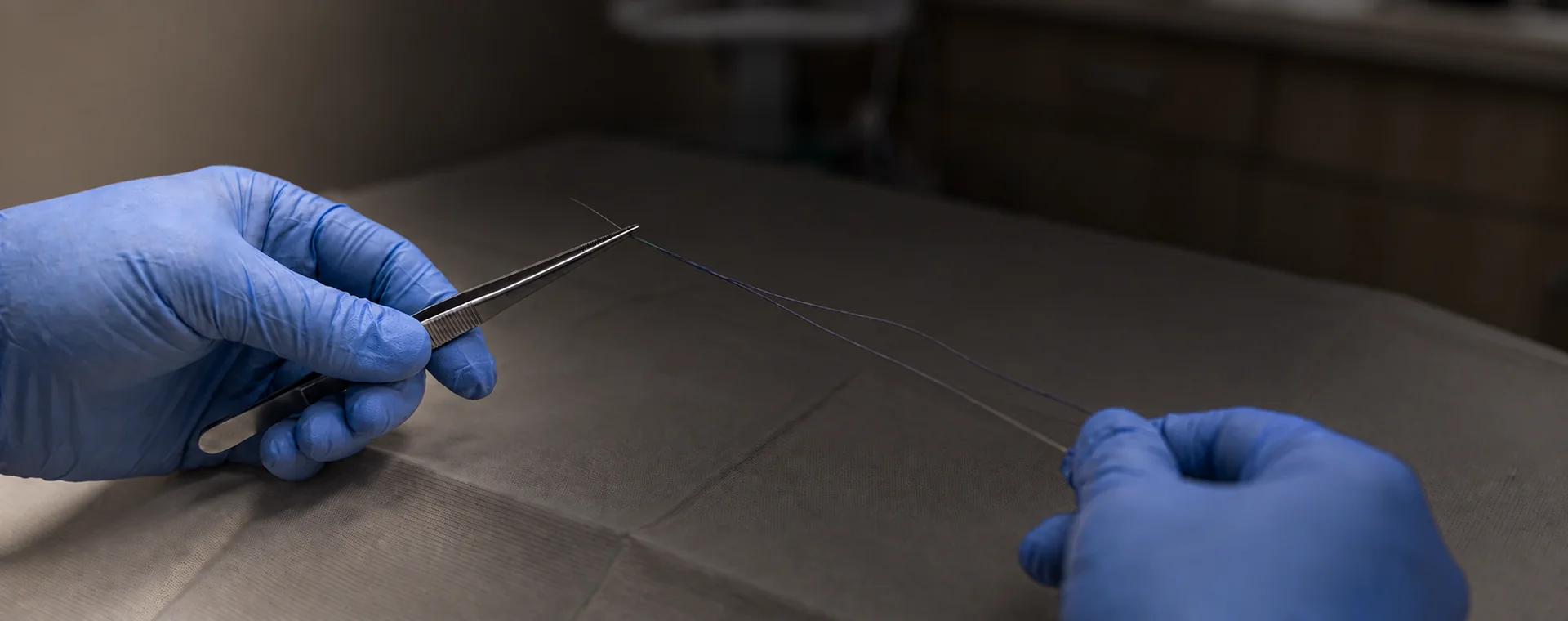
What is a facial laceration?
A facial laceration is a wound in which the skin of the face is torn open by an external impact. Unlike an abrasion, where the skin is scraped, or a puncture, where a sharp object pierces deeply, a laceration has gaping skin edges, so the need for stitches is judged by its depth and how far it gapes.
Because scars show on the face and areas like the eyes and lips move a lot, whether and how to suture is decided more carefully than for a wound of the same length elsewhere on the body.
What causes facial lacerations?
Facial lacerations happen when someone falls and hits the floor or a furniture edge, collides during sports, is cut by glass or a sharp object, or is bitten by a person or animal. In data on 1,160 simple facial lacerations at one pediatric emergency department, more than half of the children were under six and boys outnumbered girls in every age group.
Falls and impacts
The pediatric facial laceration study examined falls, hitting hard objects, and sports injuries as causes, and covered wounds on the forehead, around the eyes, cheeks, around the mouth, nose, and under the chin.
Sharp objects
A cut from glass or a blade may look small on the surface yet hide tendon, nerve, or blood vessel damage or foreign material.
Bite wounds
Facial wounds from human or animal bites are prone to infection, so cleaning and removing damaged tissue come first.
How do facial lacerations differ by type and depth?
Facial lacerations are assessed by how wide they gape, their depth, the condition of the edges, and their location. A shallow wound involving only the epidermis can heal with cleaning and protection, but wounds gaping 3 mm or more, showing the dermis or fat layer, or located around the eyes, lips, forehead, or nose are considered for suturing.
Shallow, non-gaping wound
An epidermal-level wound whose edges stay together and whose bleeding stops soon.
Gaping wound
A wound gaping 3 mm or more or showing the dermis or fat layer meets the criteria for suturing.
Wound with crushed edges
If a blunt impact has left irregular edges or damaged tissue, it is trimmed before suturing.
Eyelid, lip, nose, and ear wounds
For an eyelid wound, checking the eye for injury comes first; for a lip wound, precise alignment of the vermilion border is key.
What first aid should be given for a cut on the face?
If bleeding does not stop after more than 10 minutes of pressure, or feeling or movement in the injured area is abnormal, go to an emergency department right away. For other wounds, rinse with running water or saline, press with clean gauze to reduce bleeding, and if an object is embedded, leave it in place and seek care.
Emergency department right away
When bleeding does not stop after more than 10 minutes of pressure or spurts out, when there is numbness or abnormal movement, or when a severe facial injury causes double vision or difficulty breathing through the nose
Rinse
Rinse away dirt with running water or saline, and avoid alcohol and alcohol swabs.
Stop bleeding and cover
Cover with clean gauze or a bandage and apply direct pressure to reduce bleeding.
What not to do
Do not pull out a deeply embedded object or dig for debris inside the wound.
How is a facial laceration assessed, and how is the need for stitches decided?
The suturing method is chosen after checking the wound's depth, how far it gapes, the bleeding pattern, contamination and foreign material, and any nerve, blood vessel, or tendon damage. MedlinePlus advises that a wound deeper than about 0.64 cm, on the face, or reaching the bone may need stitches.
Depth and gaping
Check whether the dermis or fat layer is visible and whether the wound gapes 3 mm or more.
Location
Around the eyes, lips, forehead, and nose, scars show and the skin moves a lot, so suturing is considered more readily.
Contamination and bites
Wounds containing soil or glass, or bite wounds, carry an infection risk, so they may not be closed immediately; suturing is decided after cleaning and debridement.
Tetanus and medical history
Check the date of the last tetanus shot, current medications, and any keloid history.
How is a facial laceration treated?
After cleaning and removing damaged tissue, a facial laceration is repaired by wound closure, debridement, or muscle repair depending on its condition. On timing, an American Academy of Family Physicians review explains that studies have not defined a "golden period" for closing a wound without raising infection risk and that some wounds can be closed even 18 hours or more after injury, but Myongji Best Plastic Surgery Clinic recommends suturing within 24 hours of the injury to prevent infection and minimize scarring.
| Treatment | Main role | What to consider |
|---|---|---|
| Wound closure | Main roleAligns and sutures the torn skin edges | What to considerUsed for simple gaping lacerations |
| Debridement | Main roleRemoves contaminated or damaged tissue before suturing | What to considerCrushed or contaminated wounds |
| Muscle repair | Main roleSutures the muscle when the injury reaches the muscle layer | What to considerDeep wounds and areas with facial expression muscles |
| Layered and microsuturing | Main roleAligns the dermis and fat layer by layer and adjusts skin spacing and tension with 8/0 microsutures | What to considerAreas where scars show, such as the face, eye area, and lips |
| Skin adhesive and strips | Main roleCloses small, low-tension wounds without stitches | What to considerNot used around the eyes or in the nose, ear, or mouth |
| Delayed closure | Main roleCloses high-infection-risk wounds after cleaning and a waiting period | What to considerBites, heavy contamination, tissue swelling |
How does Myongji Best Plastic Surgery Clinic repair a facial laceration?
Myongji Best Plastic Surgery Clinic in Myeongji-dong, Gangseo-gu, Busan chooses the suturing method after checking the wound's depth, contamination, foreign material, and nerve, blood vessel, and tendon damage, and uses 8/0 microsutures when needed to match skin spacing and tension in areas where scars show or move a lot, such as the face, eye area, and lips. A visit the day after suturing is recommended to check for bleeding, inflammation, and hematoma and to disinfect the wound, and stitches on the face and neck are removed around 5 to 7 days.
- STEP 01
Before treatment: wound assessment
Check depth, gaping, bleeding pattern, contamination and foreign material, and nerve, blood vessel, and tendon damage.
- STEP 02
During treatment: cleaning and debridement
Clean the wound and remove contaminated or damaged tissue.
- STEP 03
During treatment: layered and microsuturing
Check the dermis, fat layer, and muscle layer according to wound depth and suture layer by layer, matching the skin with 8/0 microsutures when needed.
- STEP 04
After treatment: next-day check
Check for bleeding, inflammation, and hematoma and disinfect.
- STEP 05
After treatment: stitch removal
Stitches are removed around 5 to 7 days on the face and neck and 10 to 14 days on the scalp, trunk, limbs, hands, and feet.
What are recovery and scar care like after facial laceration repair?
Keep the wound clean and dry for the first 24 to 48 hours after suturing, then after stitch removal apply scar ointment twice a day for 2 to 3 months and keep up sun protection. A scar takes 6 months to 2 years to mature, and scar laser is usually considered 1 to 2 months or more after stitch removal.
Do
Keep the dressing as instructed, and use scar ointment and sunscreen consistently after stitch removal.
Avoid
Do not rub the sutured area or pick at scabs, and limit strenuous activity that could reopen the wound.
Washing, showering, and bathing
Washing the face and showering are possible after stitch removal, and bathing and swimming start later, so the exact timing is given at the consultation.
When to start scar laser
Decided by wound location, redness, scar thickness, and healing.
Which symptoms mean I should contact the clinic right away?
Contact the clinic right away if the sutured area becomes red, swollen, or increasingly painful or drains pus, if you have a fever of 37.7°C or higher, if the wound splits open or stitches come out early, or if new numbness or tingling develops. If the scar keeps thickening, the redness deepens, or itching recurs after stitch removal, have it examined for a hypertrophic scar or keloid.
The suturing method, stitch removal timing, and scar course vary with the wound's cause, location, depth, and contamination, so your medical team's diagnosis and instructions take priority over general information online.
How is the cost of facial laceration repair determined?
Myongji Best Plastic Surgery Clinic's published non-covered fee list does not show a single price for facial laceration repair (checked October 22, 2026). The cost depends on wound length, depth, and contamination, the extent of anesthesia and dressings, and any later scar treatment, so the total is confirmed after an examination, and non-covered fees may change.
A note from Myongji Best Plastic Surgery Clinic
With a facial laceration, when the wound is checked and how it is cared for shape the scar as much as how it is sutured. Please come in as soon as possible after the injury so we can check the wound's depth and location together and set the scar care schedule for after stitch removal.
Frequently asked questions
Does a facial laceration have to be sutured at a plastic surgery clinic?
If there are no emergency signs, what matters more than where the wound is sutured is whether microsuturing is applied to areas where scars show or move a lot, such as the face, eye area, and lips. Myongji Best Plastic Surgery Clinic uses 8/0 microsutures when needed to match skin spacing and tension and follows up with scar care after stitch removal.
Are cuts on the lip or eyebrow sutured too?
For a lip wound, the key to repair is aligning the vermilion border precisely, and for an eyelid wound the eye is checked for injury before suturing. The eye area and lips are sites where Myongji Best Plastic Surgery Clinic applies microsuturing with 8/0 microsutures when needed.
Are deep (buried) sutures always needed for a facial laceration?
It depends on wound depth. In a randomized study of 65 small, simple facial lacerations gaping less than 10 mm, adding deep dermal sutures made no difference in scar width or appearance scores at 90 days, and Myongji Best Plastic Surgery Clinic likewise decides on layered suturing according to how deep the dermis, fat layer, or muscle layer is injured.
How long does it take for a facial laceration scar to fade?
The Asan Medical Center disease encyclopedia explains that a scar takes 6 months to 2 years to fully mature. During that time, continue scar ointment and sun protection after stitch removal, and scar laser is usually considered 1 to 2 months or more after stitch removal based on wound location, redness, thickness, and healing.
About the clinic behind this article
Myongji Best Plastic Surgery Clinic is a board-certified plastic surgery clinic in Myeongji-dong, Gangseo-gu, Busan. Dr. Hyungseok Noh, board-certified plastic surgeon and medical director, provides care.
- Address
- Units 302–305, Building 1, 3 Myeongji-gukje 2-ro 28beon-gil, Gangseo-gu, Busan
- Main Line
- 051-711-7991
- Clinic Hours
- Weekdays AM 10:00 ~ PM 07:30Saturday AM 10:00 ~ PM 03:00Sundays & Public Holidays Closed
- Treatment guide
- View the wound suturing page
- Booking
- Naver Booking
REFERENCES
References
This article uses the clinic’s published information together with authoritative medical sources.
- Myongji Best Plastic Surgery ClinicWound suturing guide
Supports: Types of suturing, 8/0 microsuturing for the face, eye area, and lips, suturing within 24 hours, next-day disinfection, stitch removal timing by site, care after stitch removal, and scar laser timing
Stitch removal is planned at 5–7 days for the face and neck and 10–14 days for the scalp, trunk, limbs, hands, and feet.
- Myongji Best Plastic Surgery ClinicPediatric Microsuturing guide
Supports: Criteria for suturing (gaping 3 mm or more, exposed dermis or fat layer, around the eyes, lips, forehead, or nose), layered suturing, and cleaning and protection before the visit
Rather than matching only the epidermis, the dermis, fat layer, and muscle layer are checked according to wound depth and sutured layer by layer.
- Myongji Best Plastic Surgery ClinicNon-covered fee guide
Supports: No single price for trauma suturing on the published fee list
- MedlinePlusCuts and puncture wounds
Supports: Emergency criteria for bleeding that does not stop after 10 minutes of pressure or abnormal sensation, wound depth and facial location that may need stitches, bites, foreign objects, tetanus, and signs of infection
The wound is more than a quarter inch (0.64 centimeter) deep, on the face, or reaching the bone. Stitches may be needed.
- MedlinePlusLaceration - sutures or staples - at home
Supports: Keeping the wound dry for 24–48 hours after suturing, limiting activity, and signs of infection, wound opening, fever, or numbness that need a return visit
Keep the area clean and dry for the first 24 to 48 hours after stitches have been placed.
- MedlinePlusLacerations - liquid bandage
Supports: Areas where liquid bandage is not used: around the eyes, in the ear, nose, or mouth
Do not use liquid bandage around the eyes, in the ear or nose, or internally in the mouth.
- MedlinePlusFacial trauma
Supports: Emergency department criteria for severe facial injury, double vision, and difficulty breathing through the nose
Go to the emergency room or call 911 or the local emergency number if you have a severe injury to your face.
- NHSCuts and grazes
Supports: Emergency criteria for spurting bleeding, and that wounds at risk of infection may not be closed straight away
But the wound may not be closed straight away if it's infected or there's a risk it may get infected.
- American Academy of DermatologyScars: Overview
Supports: Keeping the wound clean, getting stitches when needed, and scar care with SPF 30 or higher sunscreen
It's also important to get stitches when you need them.
- Asan Medical Center disease encyclopediaScars
Supports: How long a scar takes to mature, and suspicion of a keloid or hypertrophic scar when raising persists
It takes about 6 months to 2 years for a scar to fully mature.
- PubMedLaceration Repair: A Practical Approach
Forsch RT, Little SH, Williams C. Am Fam Physician. 2017;95(10):628-636. PMID: 28671402
Supports: That no golden period for suturing has been defined, closure possible after 18 hours, moist wound environment, and the evidence level for stitch removal timing by site
Studies have been unable to define a "golden period" for which a wound can safely be repaired without increasing risk of infection.
- PubMedSingle-layer versus double-layer closure of facial lacerations: a randomized controlled trial
Singer AJ, Gulla J, Hein M, Marchini S, Chale S, Arora BP. Plast Reconstr Surg. 2005;116(2):363-368. doi:10.1097/01.prs.0000172758.00088.81. PMID: 16079656
Supports: Comparison of 90-day scar width and appearance between single- and double-layer closure in 65 small, non-gaping simple facial lacerations
Cosmetic outcome and scar width are similar in sutured wounds whether or not deep dermal sutures are used.
- PubMedTreatment of traumatic facial injuries
Anneberg M, Heje JM, Akram J. Ugeskr Laeger. 2014;176(39):V05140308. PMID: 25294326
Supports: Checking the eye in eyelid wounds, aligning the vermilion border, and layered closure of the scalp
The key to proper repair of lip laceration is alignment of the vermillion border.
- PubMedManagement of facial bite wounds
Stefanopoulos PK, Tarantzopoulou AD. Dent Clin North Am. 2009;53(4):691-705. doi:10.1016/j.cden.2009.08.005. PMID: 19958906
Supports: Infection risk of facial bite wounds, primary closure after cleansing, and delayed closure with crushed tissue or swelling
Delay in presentation beyond 24 hours is not necessarily a contraindication to immediate repair, but excessive crushing of the tissues or extensive edema usually dictates a more conservative approach, such as delayed closure.
- PubMedA descriptive study of facial lacerations presenting to pediatric emergency in Turkey
Albayati A, Özkan B, Eyüboğlu A, Uysal ÇA, Ertaş NM. Ulus Travma Acil Cerrahi Derg. 2021;27(1):61-66. doi:10.14744/tjtes.2020.57879. PMID: 33394475
Supports: Age distribution and sex of 1,160 children with simple facial lacerations
Fifty-three percent of the population was younger than six years and there was a male predominance in all age groups.
Published 2026.10.23Last updated 2026.10.23