
How to be buried
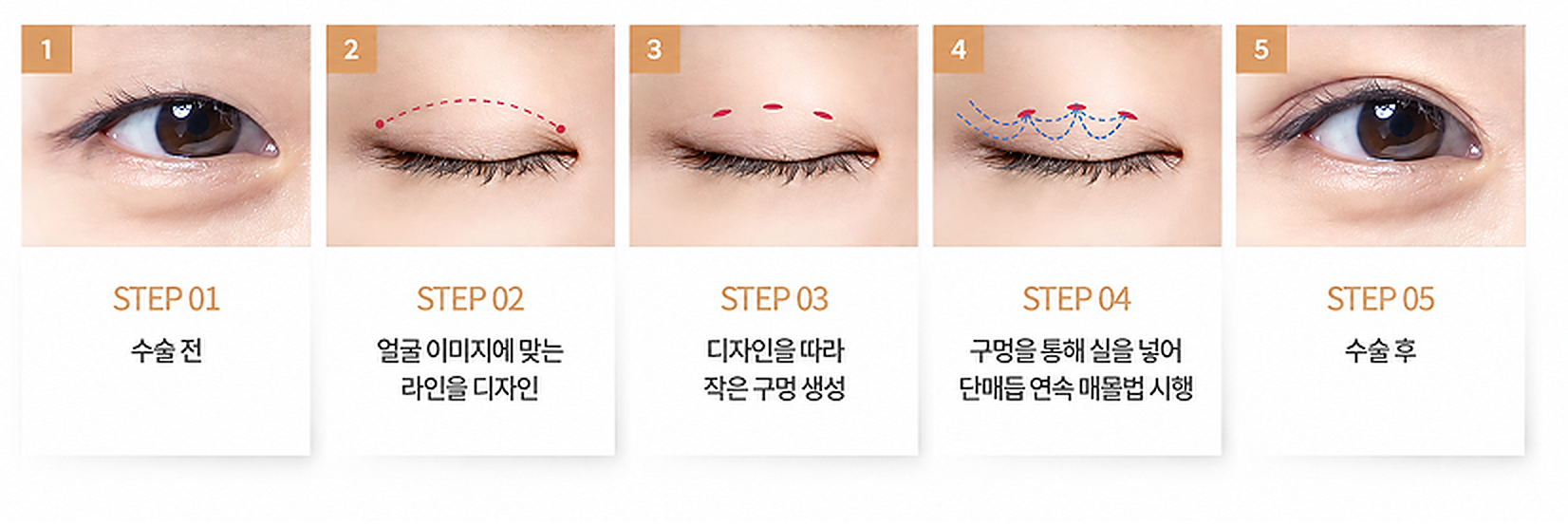
Use a special thread without skin incisions
It connects the eye-opening muscles and skin and forms a double eyelid line.
DOUBLE EYELID
We compare non-incisional and incisional methods to plan for your eyelid anatomy.

ABOUT
The skin thickness and sagging of the eyelids, the amount of fat, and the function of the muscles that open the eyes are
It is an element to check together when choosing a method.
Non-incisional and incisional methods differ not only in how the crease is created,
There is a difference in recovery, scars, and maintenance methods.
METHOD
Non-incisional and incisional methods use different tissues and surgical approaches to create the crease.
Use a special thread without skin incisions
It connects the eye-opening muscles and skin and forms a double eyelid line.
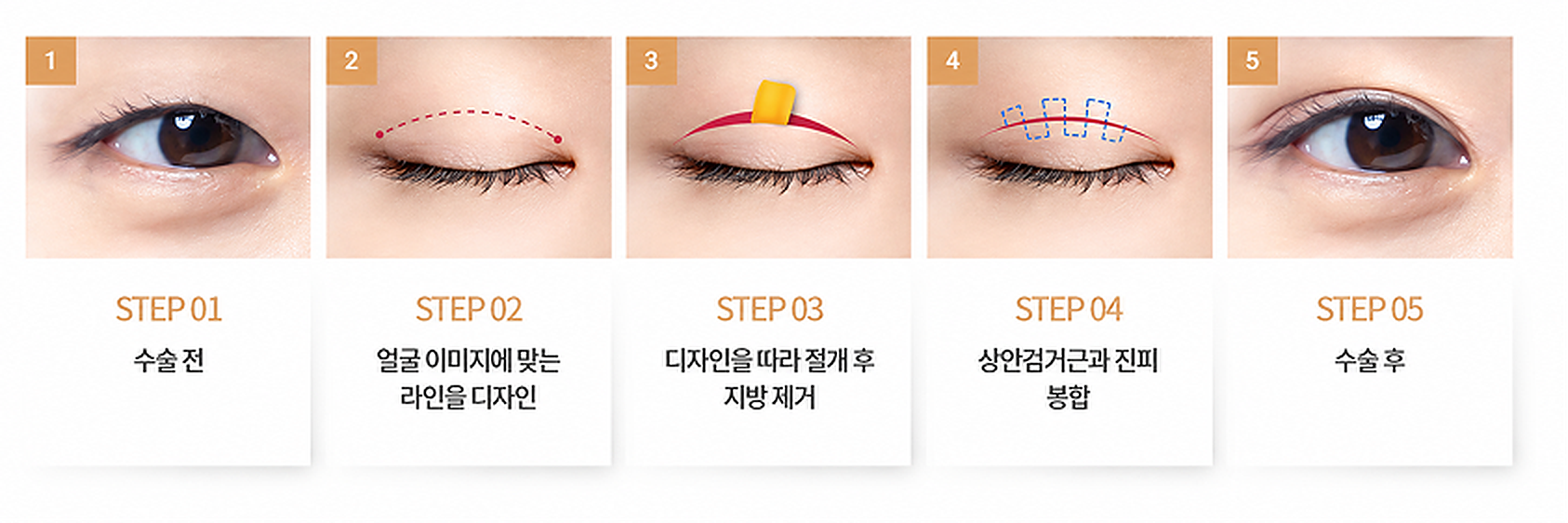
After cutting the eyelid skin to a certain extent
Remove some soft tissue such as skin, fat, muscle, etc. and fix the double eyelid line.
CHECK
Than one standard
Check the various conditions of the eyelids together.
PROCESS
COMPARISON
BEFORE SURGERY
Before you decide how to do the surgery
Check the limits and recovery characteristics of each method together.
※ The appropriate method may vary depending on the condition of the eyelids, so consult with a specialist to decide.
FAQ
The burying method is carried out without an incision, so the burden of swelling, bruise, and scars is relatively low and the recovery is fast.
The incision can last longer for recovery and pain, and the scars usually fader over time.
The non-incisional method may loosen over time or loosen the thread due to external impact.
The incision method has a relatively high retention power by partially abstining and fixing the tissue.
It can be applied to complex conditions such as sagging and fatty eyes, thick skin, or bleps.
You can adjust soft tissues such as skin, fat, and muscles.
You can look at the structural problems of the eyelids together.
There is a limit to the decreased function of the upper eyelid surgery, severe sagging and asymmetry.
In the case of repetition, fibrosification inside the eyelids may occur, so you need to consult a specialist.
CONTACT
Check the difference between the non-incisional method and the incision method and guide you to the direction that matches your current eye condition.
 Skin thickness and sagging degree
 The non-incisional method may loosen the line over time or loosen the thread due to external impact.