
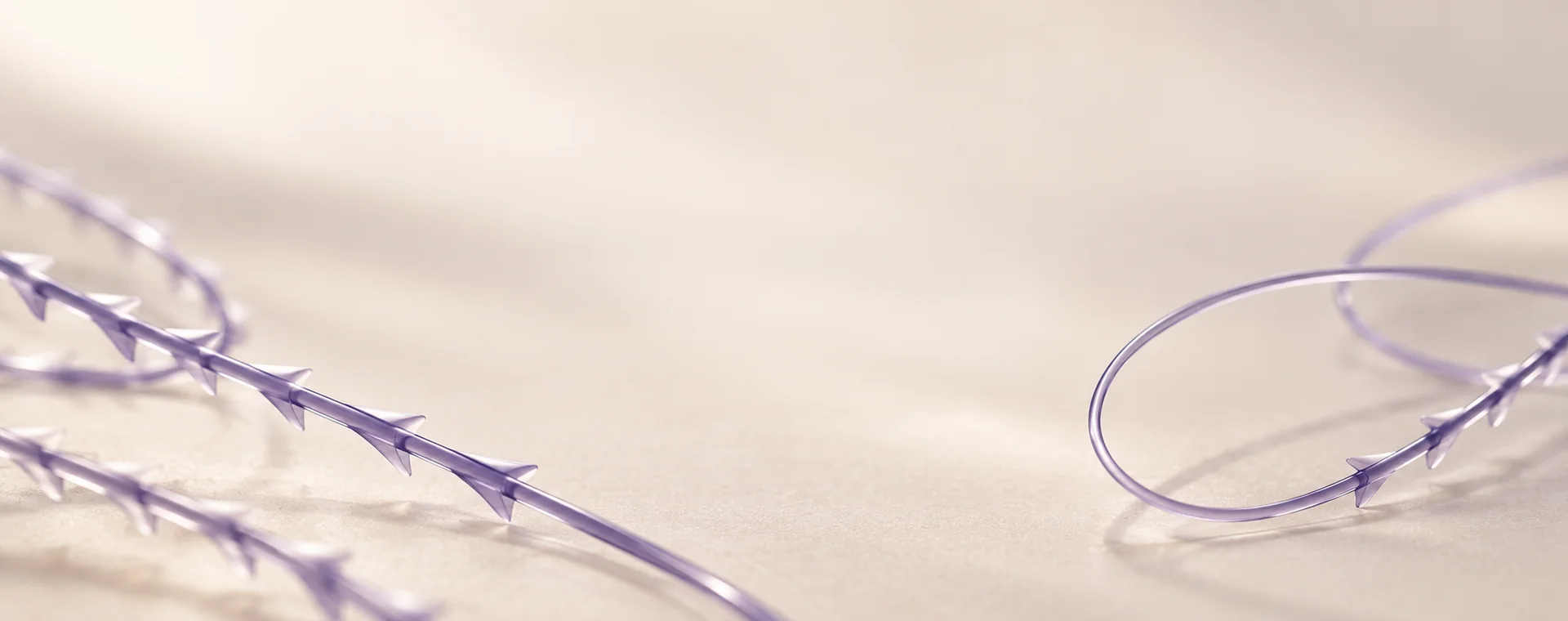
What kind of sagging and wrinkles can thread lift help?
Thread lift is a procedure that supports the sagging tissue in the desired direction by inserting a special medical absorbent thread into the required depth. You can manage sagging cheeks, blurred jaws, and wrinkles on the cheeks and mouth, but it is not a way to correct severe sagging like surgery.
The type of thread, insertion depth, and support direction depend on the condition of the skin, fat, and SMAS layer. When looking for a thread lift in Busan, you should consult the position, cause, and expected changes of the sagging rather than the number of threads.
Under what conditions can I consider thread lift?
It can be considered when the skin elasticity is reduced and the contour line is blurred, the cheeks are sagging and the jawline is collapsed, and wrinkles on the eyelids, mouth, and eyes are a concern. In the case of excessive skin sagging, large amount of fat, and skeletal changes, surgical methods such as facial esthesis should be compared together.
Early and moderate sagging
If you are worried about the sagging of the cheeks and chin, or blurring the contours
Wrinkles and elasticity
If there are wrinkles on the eyelids, mouth, and eyes and decreased skin elasticity
Comparison of other methods
If the skin sagging is large or the main is due to a large amount of fat and volume
Check before consultation
Drugs that affect bleeding, skin infections, keloid history, allergies and previous treatment history
What's the difference between thread lift and facial eeltath?
Thread lift is a non-incision procedure that supports the absorbent thread tissue, and the facial elogation is a surgery that adjusts the sagging tissue wider through the incision. The degree of sagging, the recovery period, and the desired range of change are the selection criteria.
| Comparison criteria | Thread Lift | facelift |
|---|---|---|
| Approach | Thread LiftInsert the absorbent thread into the required depth | faceliftAdjust skin and tissue through incisions |
| Main target | Thread LiftEarly and middle cheek sagging and chin line blurring | faceliftWide and distinct skin and tissue sagging |
| Recovery Guide | Thread LiftAbout 3~7 days, bruise, swelling, and tense of tenses are individual | faceliftDepending on the scope of surgery, a longer recovery period is required. |
| Key Limits | Thread LiftIt is limited to correcting severe sagging at the level of surgery. | faceliftConsidering the burden of incision and surgery recovery together |
In what order does Myongji Best Plastic Surgery Clinic proceed?
Myongji Best Plastic Surgery Clinic in Myeongji-dong, Gangseo-gu, Busan, checks the location of the sagging, the facial contour, the condition of the skin, fat, and the SMAS layer, and plans the type of thread and the direction of support. The procedure considers local anesthesia or IV sedation, and the anesthesia method is consulted according to the sensitivity of pain and the scope of the procedure.
- STEP 01
Check the sagging position and structure
Check the direction of sagging and skin condition of the cheeks, jawline, and wrinkles.
- STEP 02
Thread type and depth plan
We determine the necessary thread and insertion depth such as monosil, mint sil, epiticon sil, etc.
- STEP 03
Support direction design
Plan the desired facial contour direction and entry point.
- STEP 04
Anesthesia and thread insertion
After the consultation anesthesia, insert the thread into the planned depth and support the tissue.
- STEP 05
Progress confirmation
We will check the swelling, pull, and skin condition and guide you through the life management schedule.
When to check the effect and how much is it maintained?
Thread lift evaluates the results after the support change immediately after the procedure and the swelling subsides. Changes in the collagen environment around the thread can take time, and the actual changes vary depending on the skin condition and the degree of sagging.
The maintenance period of the hospital is about 6 months for the mono room, about 1 year for the mint room, and about 1 year and a half to 2 years for the epiticon room, but there are individual differences. The time of re-sup is determined by looking at the type of thread, the degree of sagging and the course.
What should I know about pain, recovery, and side effects?
The treatment time is about 30 to 60 minutes and the recovery period is about 3 to 7 days. Bruise, swelling, and pulling are individual differences, so the shape immediately after the procedure should not be judged as the final result.
Initial management
During the period of guidance, avoid strong expressions, massages, and pressure on the treatment area.
Life management
Drinking, saunas and saunas, extreme exercise and excessive mouth opening are subject to the guidance of the medical team.
Possible reaction
Bruise, swelling, pain, pulling, asymmetry, threading, protrusion, and inflammation may appear.
A sign that medical treatment is needed
Severe pain, rapidly worsening swelling and redness, pus, thread exposure or abnormal sensation
The recovery progress and risk vary depending on the thread type, insertion range, and skin condition. If there is any abnormal reaction, please check with the medical team.
What should I check before the cost and consultation?
The actual cost of thread lift may vary depending on the type and number of threads, the area of application, and whether it is performed in parallel with anesthesia. In the public non-covered guidance and consultation quotation, you should check the type and number of threads, the scope of anesthesia and course management.
Type and number of threads
Check which threads to use and the reason for the choice.
Application area and direction
Ask which part of the cheek, jawline, or mouth where you plan in which direction.
Anesthesia and recovery plan
Check whether local anesthesia and IV sedation are applied and the schedule for returning to daily life.
Health information
It informs you of medication, bleeding tendency, skin disease, infection, and previous procedure history.
non-covered costs are subject to change, so please check the latest public data and consultation estimates again before making a decision.