
Facial Sagging
Facial sagging is the downward drift of the cheek, nasolabial, jawline and neck contours caused by loss of skin elasticity, weakening of SMAS and ligament support, shifting fat compartments, and facial bone resorption. Myongji Best Plastic Surgery Clinic in Myeongji-dong, Busan explains its causes, signs by area, a self-check, and treatment steps from non-surgical lifting to facelift surgery.
At a glance
- Main symptoms
- Sagging cheeks and deepened nasolabial folds, jowls that blur the jawline, double chin and loose neck skin
- Causes
- Loss of skin elasticity, weakened SMAS and ligament support, fat compartment changes, facial bone resorption, gravity, UV light and smoking
- Related conditions
- Skin aging, eyelid drooping, lower eyelid orbital fat protrusion
- Treatment
- Non-surgical lifting (Shurink, Alltite) → thread lift → mini facelift, facelift and neck lift
- Department
- Plastic surgery
What is facial sagging?
Facial sagging is the downward drift of the cheek, nasolabial, jawline and neck contours as the structures supporting the skin and soft tissue weaken. The Asan Medical Center disease encyclopedia explains that the skin thins and loses elasticity, and the attachment between subcutaneous fat and skin weakens, so the skin stretches and sags with gravity.
The American Society of Plastic Surgeons lists sagging from relaxed skin, deepening of the fold lines between the nose and corner of the mouth, fat that has fallen or disappeared, jowls in the cheeks and jaw, and loose skin and excess fat of the neck that look like a double chin or turkey neck as visible signs of aging in the face and neck.
Why does the face sag?
Facial sagging results from overlapping changes in every layer: the skin, the SMAS layer and ligaments beneath it, the fat compartments, and the bone. The skin thins and loses elasticity, supporting ligaments loosen, fat shifts position, and bone is resorbed, so the contours appear to have descended.
Skin
Elastic fibers and collagen in the dermis degenerate, so the skin thins and stretches. Besides thinning skin, the American Society of Plastic Surgeons cites gravity, sun damage, smoking, heredity and stress as factors in the loss of contours.
SMAS layer and ligaments
When the SMAS layer and retaining ligaments beneath the skin loosen, the tissue resting on them slides down. A 2015 review explains that reduced ligamentous support leads to laxity of the soft tissues.
Fat compartments
Facial subcutaneous fat is divided into several independent compartments, and aging progresses differently in each. A 2007 anatomical study (30 hemifacial cadaver dissections) reported that the face does not age as a single mass.
Bone resorption
When the maxilla, orbital rim and prejowl mandible are resorbed, skeletal projection decreases and the tissue appears to have descended. In a CT study (120 men and women), mandibular length and height decreased and the mandibular angle increased with age.
Where and how does facial sagging appear?
Facial sagging appears progressively in the midface, where the cheeks descend and nasolabial folds deepen; the lower face, where the jawline blurs; and the neck, with a double chin and loose skin. The Asan Medical Center disease encyclopedia describes not only sagging but also atrophy, where the cheeks and eye area hollow and look gaunt, as a feature of the aging face.
Cheeks and nasolabial folds
The cheeks sag and lines appear beside the nose and at the corners of the mouth, while the fat above the nasolabial fold becomes more prominent.
Jawline
The deep cheek and jawline descend, blurring the jaw border, and jowls form on the cheeks and jaw.
Double chin and neck
Fat accumulates under the chin to form a double chin, the front neck skin loosens, and the broad muscle on each side of the neck creates thick vertical bands.
Around the eyes
The upper eyelids and brows droop, giving a tired look, and orbital fat in the lower eyelid protrudes to form bags.
How is facial sagging checked and diagnosed?
Checking facial sagging starts in front of a mirror by noting where the signs listed by the American Society of Plastic Surgeons appear; at the consultation, the depth and extent of sagging, the condition of the skin and supporting layers, and any accompanying volume loss are assessed together. The Asan Medical Center disease encyclopedia notes that no special tests are needed before a procedure, but that smoking, medication and topical ointment use should be discussed with a doctor in advance.
Self-check 1
See whether the fold between the nose and the corner of the mouth stays deep even without expression.
Self-check 2
See whether cheek tissue has descended along the jawline and blurred the jaw border, and whether there is a double chin or loose skin on the neck.
Self-check 3
If hollowing of the cheeks and eye area is more noticeable than sagging, volume restoration may suit better than lifting, so both are checked.
Checked at the consultation
Whether sagging is concentrated in the cheeks, mouth corners and jawline or extends across the whole face and neck, and the condition of the skin and SMAS layer, are checked to decide the method.
How is facial sagging treated, and when is surgery considered?
Treatment of facial sagging steps up from non-surgical lifting in the early stage, to thread lift when sagging is pronounced, to mini facelift, facelift and neck lift when it is extensive or severe. The American Society of Plastic Surgeons notes that minimally invasive treatments cannot achieve the same results as a facelift but may help delay the time at which a facelift becomes appropriate and complement the results of surgery.
| Treatment step | Main role | What to consider |
|---|---|---|
| Non-surgical lifting (focused ultrasound, radiofrequency) | Main roleEarly loss of elasticity and a blurred facial line | What to considerRepeated at intervals of weeks; temporary redness, warmth and swelling |
| Thread Lift | Main roleSupport sagging cheeks and jawline with threads | What to considerDuration differs by thread type; bruising, swelling and tightness |
| Mini Facelift | Main roleFocused correction of cheeks, mouth corners and jawline | What to considerIncision around the ear; scope differs for extensive sagging |
| Facelift and neck lift | Main roleSevere, extensive sagging and a loose neck | What to considerGeneral anesthesia and admission, 2-3 weeks of recovery, no published fee |
| Volume restoration (filler, fat grafting) | Main roleWhen hollowing comes before sagging | What to considerWhether to combine with sagging correction is decided at the consultation |
The Asan Medical Center disease encyclopedia recommends an incisional facelift when the skin is severely sagging and other methods are expected to be less effective, and the American Society of Plastic Surgeons names a neck lift as an option when the upper face is still pleasing but the neck has sagged. No surgery can stop the aging process itself.
How does Myongji Best Plastic Surgery Clinic treat facial sagging?
Myongji Best Plastic Surgery Clinic in Myeongji-dong, Gangseo-gu, Busan checks the depth and extent of sagging and the condition of the skin and supporting layers, then chooses what is needed among Shurink or Alltite, thread lift and mini facelift. The method is not chosen simply because the incision is small, and when sagging is severe and extensive, the difference from a full facelift is reviewed as well.
- STEP 01
Assess the extent and depth of sagging
Identify which of the cheeks, mouth corners and jawline to focus on and check the supporting layer beneath the skin.
- STEP 02
Non-surgical lifting
In the early stage, when the facial line blurs and elasticity drops, focused ultrasound Shurink (3 sessions at 3-4-week intervals, about 20-30 minutes) or radiofrequency Alltite (3 sessions at 2-4-week intervals, then maintenance 1-2 times a year) is used.
- STEP 03
Thread Lift
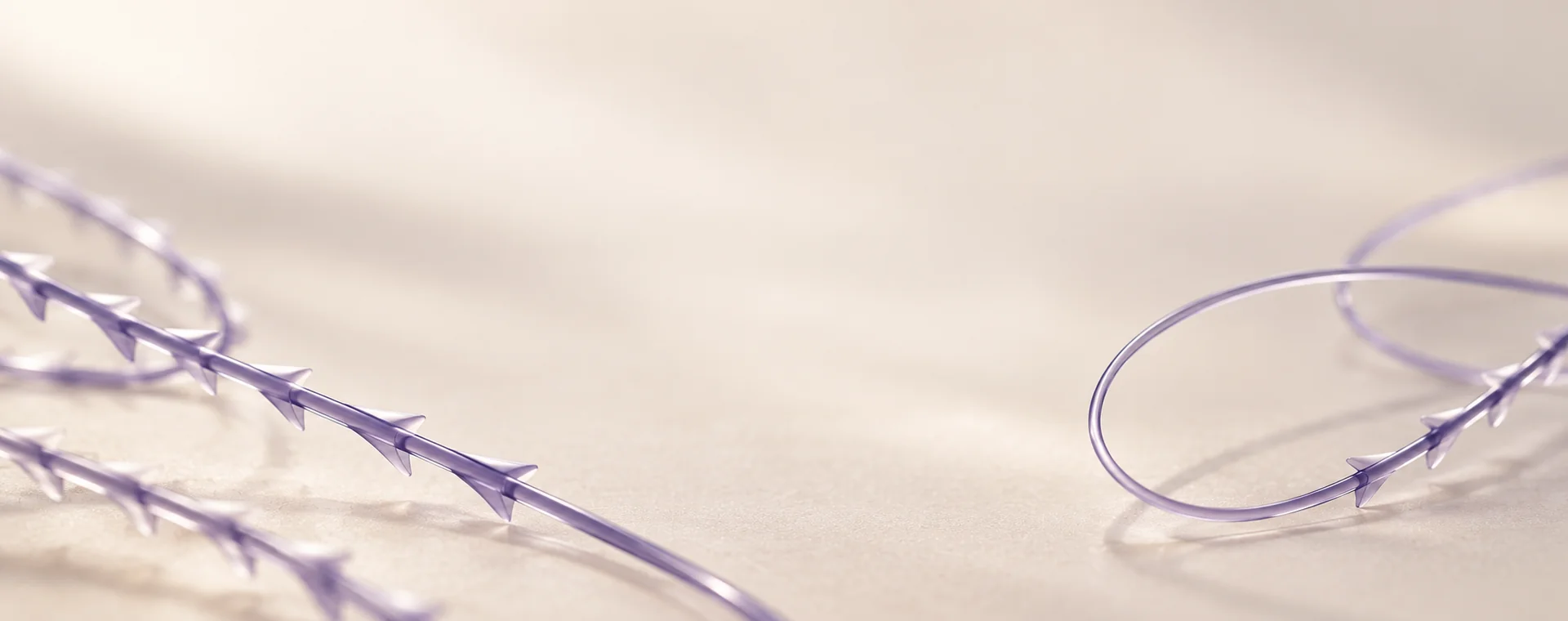
For sagging cheeks and a collapsing jawline, absorbable threads are placed at the needed depth to support the tissue. Epiticon threads are used for moderate or greater sagging, Mint threads for the cheek and jawline, and mono threads to support elasticity; it takes about 30-60 minutes under local or sedation anesthesia.
- STEP 04
Mini Facelift
When sagging of the cheeks, mouth corners and jawline has begun and focused correction is wanted, a small incision in front of or behind the ear is used to release the ligaments and pull and fix the SMAS layer. Sedation and local anesthesia are combined, and it takes about an hour.
- STEP 05
Follow-up
Recovery and contour changes are checked, and whether maintenance or a next step is needed is decided.
What is recovery and self-care like after treatment for facial sagging?
Recovery after treatment for facial sagging is guided as same-day return for non-surgical lifting, about 3-7 days for thread lift and usually 1-2 weeks for mini facelift, and moisturizing and sun protection continue whichever method is used. The American Society of Plastic Surgeons notes that continuing daily sun protection and a healthy lifestyle helps extend facelift results.
After Shurink or Alltite
Redness, warmth and swelling usually ease within days; avoid hot environments such as saunas and jjimjilbang and forceful massage for 3-5 days.
After thread lift
For a few days avoid exaggerated expressions, opening the mouth wide, facial massage, saunas, alcohol and smoking, and strenuous exercise.
After mini facelift
Swelling, bruising and tightness may occur, and 1-2 follow-up visits are made. Some numbness after surgery recovers over several months.
Preventive habits
Rapid weight loss can make the skin sag and deepen wrinkles, and smoking, sleeping only on one side and a high pillow are causes of face and neck wrinkles.
Which symptoms mean I should contact the clinic right away?
If one side of the face suddenly droops and it is hard to smile, or an arm weakens and speech slurs, it may be a sign of stroke, which differs from age-related sagging, so call emergency services (119 in Korea) immediately. After a lifting procedure or surgery, contact the clinic right away if one side suddenly swells severely or pain increases, or if there is bleeding, high fever, skin color change, a thread showing or protruding, or persistent numbness.
The treatment step and whether surgery is needed for facial sagging vary with its depth and extent, the condition of the skin and supporting layers, and general health, so the medical team sets the plan after an examination.
How much does treatment for facial sagging cost?
Myongji Best Plastic Surgery Clinic's published non-covered fee list shows Shurink Universe 300 shots 129,000 KRW, Alltite 690,000 KRW per session and 1,890,000 KRW for 3 sessions, thread lift full face 1,200,000 KRW and double chin 450,000 KRW, and mini facelift 3,500,000 KRW (confirmed October 22, 2026). A full facelift and neck lift have no published fee and are confirmed at consultation; non-covered fees may change.
A note from Myongji Best Plastic Surgery Clinic
Facial sagging is not only a skin problem but the combined result of changes in the supporting layers, fat and bone, so the first step is to see which layer it started in. Tell us which areas bother you and what lifting you have had before, and we will choose the step with you to suit the extent of sagging.
Frequently asked questions
Does losing weight make facial sagging worse?
The Asan Medical Center disease encyclopedia notes that losing weight too rapidly can make the skin sag and wrinkles deepen. Conversely, hollowing that makes the cheeks and eye area look gaunt is distinguished from sagging and may call for volume restoration, so both are checked at the consultation.
Does massage improve facial sagging?
In the Asan Medical Center and American Society of Plastic Surgeons materials reviewed for this article, no evidence was found that massage reverses sagging. The Asan Medical Center disease encyclopedia instead advises avoiding massage that rubs too hard, and because sagging results from combined skin, SMAS, fat and bone changes, the treatment step that fits its extent is confirmed at the consultation.
Can lifting fix a sagging jawline and double chin?
Myongji Best Plastic Surgery Clinic offers Shurink and Alltite for double chin and jawline sagging, thread lift for sagging cheeks and the jawline, and mini facelift when deep-cheek and jawline sagging accentuates a double chin. When the front neck skin is loose and fat has accumulated, surgery such as a neck lift may be needed depending on the extent.
Can facial sagging be prevented?
Aging itself cannot be stopped, but daily sun protection, not smoking, and avoiding crash diets, high pillows and sleeping only on one side are the preventive habits described by the Asan Medical Center disease encyclopedia and the American Society of Plastic Surgeons. Non-surgical lifting may help delay the point at which facelift surgery becomes appropriate.
About the clinic behind this article
Myongji Best Plastic Surgery Clinic is a board-certified plastic surgery clinic in Myeongji-dong, Gangseo-gu, Busan. Dr. Hyungseok Noh, board-certified plastic surgeon and medical director, provides care.
- Address
- Units 302–305, Building 1, 3 Myeongji-gukje 2-ro 28beon-gil, Gangseo-gu, Busan
- Main Line
- 051-711-7991
- Clinic Hours
- Weekdays AM 10:00 ~ PM 07:30Saturday AM 10:00 ~ PM 03:00Sundays & Public Holidays Closed
- Treatment guide
- View the mini facelift page
- Booking
- Naver Booking
REFERENCES
References
This article uses the clinic’s published information together with authoritative medical sources.
- Myongji Best Plastic Surgery ClinicMini facelift guide
Supports: Areas and candidates for mini facelift, SMAS and ligament adjustment, incision location, anesthesia, operating time and recovery, and the difference in scope from a full facelift
A mini facelift is a surgery that focuses on the areas where sagging has begun, such as the cheeks, mouth corners and jawline, approached through a limited area around the ear.
- Myongji Best Plastic Surgery ClinicThread lift guide
Supports: How thread lift works, uses of each thread type, procedure time and anesthesia, recovery, and what to avoid afterward
The procedure takes about 30-60 minutes under local or sedation anesthesia.
- Myongji Best Plastic Surgery ClinicShurink guide
Supports: Concerns treated with focused ultrasound lifting, recommended interval and procedure time, and aftercare
3 sessions at 3-4-week intervals are recommended, and the procedure takes about 20-30 minutes.
- Myongji Best Plastic Surgery ClinicAlltite guide
Supports: Concerns treated with radiofrequency lifting, recommended interval and maintenance, and aftercare
3 sessions at 2-4-week intervals are recommended, followed by maintenance 1-2 times a year.
- Myongji Best Plastic Surgery ClinicNon-covered fee guide
Supports: Published fees for Shurink, Alltite, thread lift, and mini facelift
Shurink Universe 300 shots 129,000 KRW, Alltite 690,000 KRW per session, thread lift full face 1,200,000 KRW, mini facelift 3,500,000 KRW
- Asan Medical Center Disease EncyclopediaAging face
Supports: Mechanism of sagging, features of the aging face by area, the concept of atrophy, what to discuss before a procedure, indications and recovery for incisional facelift, neck lift, and preventive habits
The tissues that support the skin and soft tissue weaken, and the flesh sags downward.
- American Society of Plastic SurgeonsFacelift Surgery
Supports: Signs of face and neck aging, factors in loss of contours, the relationship between minimally invasive treatment and facelift surgery, and that surgery cannot stop aging
A facelift can only be performed surgically; minimally invasive rejuvenation treatments cannot achieve the same results, but may help delay the time at which a facelift becomes appropriate and complement the results of surgery.
- American Society of Plastic SurgeonsNeck Lift
Supports: Jowls, submental fat and neck muscle banding treated by neck lift, and the option when the upper face is fine but the neck has sagged
When the neck area doesn't match the upper facial appearance, a neck lift may be a good solution.
- American Society of Plastic SurgeonsFacelift Results
Supports: Effect of sun protection and lifestyle on maintaining facelift results
Continuing daily sun protection and a healthy lifestyle will help extend the results of your facelift.
- NHSStroke: Symptoms
Supports: That sudden drooping of one side of the face can be a sign of stroke
face weakness – one side of your face may droop (fall) and it might be hard to smile
- PubMedThe fat compartments of the face: anatomy and clinical implications for cosmetic surgery
Rohrich RJ, Pessa JE. The fat compartments of the face: anatomy and clinical implications for cosmetic surgery. Plast Reconstr Surg. 2007;119(7):2219-2227. doi:10.1097/01.prs.0000265403.66886.54. PMID: 17519724
Supports: That facial subcutaneous fat is divided into independent compartments that age differently (30 hemifacial cadaver dissections)
The concept of separate compartments of fat suggests that the face does not age as a confluent or composite mass.
- PubMedChanges in the facial skeleton with aging: implications and clinical applications in facial rejuvenation
Mendelson B, Wong CH. Changes in the facial skeleton with aging: implications and clinical applications in facial rejuvenation. Aesthetic Plast Surg. 2012;36(4):753-760. doi:10.1007/s00266-012-9904-3. PMID: 22580543
Supports: That the maxilla, orbital rim and prejowl mandible are resorbed with age and contribute to the features of the aging face
Areas with a strong predisposition to resorption include the midface skeleton, particularly the maxilla including the pyriform region of the nose, the superomedial and inferolateral aspects of the orbital rim, and the prejowl area of the mandible.
- PubMedAging of the facial skeleton: aesthetic implications and rejuvenation strategies
Shaw RB Jr, Katzel EB, Koltz PF, et al. Aging of the facial skeleton: aesthetic implications and rejuvenation strategies. Plast Reconstr Surg. 2011;127(1):374-383. doi:10.1097/PRS.0b013e3181f95b2d. PMID: 20871486
Supports: That in CT scans of 120 men and women, mandibular length and height decreased and the mandibular angle increased with age
Mandibular length and height both decreased significantly for each sex. The mandibular angle significantly increased with age for both sexes.
- PubMedAging Changes in the Craniofacial Skeleton and Facial Ligaments
Wong CH, Mendelson B. Newer Understanding of Specific Anatomic Targets in the Aging Face as Applied to Injectables: Aging Changes in the Craniofacial Skeleton and Facial Ligaments. Plast Reconstr Surg. 2015;136(5 Suppl):44S-48S. doi:10.1097/PRS.0000000000001752. PMID: 26441110
Supports: That loss of skeletal projection gives the impression of descent and reduced ligamentous support leads to soft tissue laxity
The resultant loss of skeletal projection gives the visual impression of descent while the reduced ligamentous support leads to laxity of the overlying soft tissues.
Published 2026.10.23Last updated 2026.10.23